

Few diplomatic agreements in South Asian history are remembered as vividly as the Tashkent Declaration. Signed on 10 January 1966, the agreement marked the first serious attempt by India and Pakistan to rebuild diplomatic relations after the devastating 1965 Indo-Pakistan War. Although it did not resolve the decades-old Kashmir dispute, it succeeded in ending the immediate military confrontation and demonstrated that dialogue remained possible even after a bitter conflict.
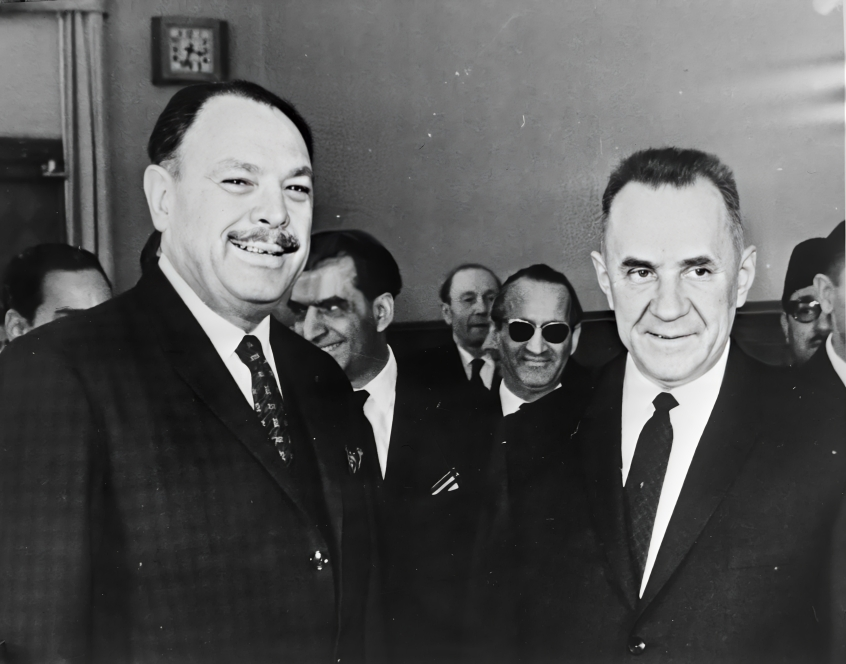
The declaration was signed in Tashkent, then a city in the Soviet Union (today the capital of Uzbekistan), by Indian Prime Minister Lal Bahadur Shastri and Pakistani President Field Marshal Ayub Khan. The negotiations were facilitated by Soviet Premier Alexei Kosygin, whose government sought to reduce tensions between the two neighbouring countries during the height of the Cold War.
More than half a century later, the Tashkent Declaration continues to be studied not simply as a diplomatic document, but as an example of how international mediation can help adversaries step back from the brink of prolonged conflict.
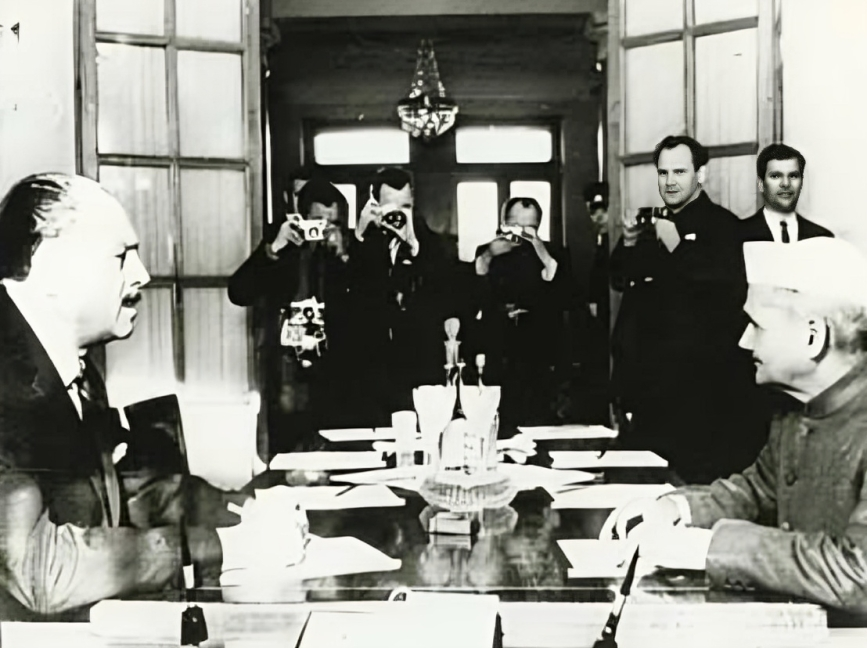
The Road to Tashkent
The agreement cannot be understood without first looking at the events that led to it.
By 1965, relations between India and Pakistan had already been strained for nearly two decades. Since the Partition of British India in 1947, both countries had claimed the region of Jammu and Kashmir, making it one of the most sensitive territorial disputes in the world.
In August 1965, Pakistan launched Operation Gibraltar, sending armed infiltrators into Indian-administered Kashmir in the hope of encouraging a local uprising. India responded with military force, and what began as a regional confrontation quickly expanded into a full-scale conventional war involving infantry, tanks, artillery and air power.
The fighting lasted several weeks and spread beyond Kashmir into Punjab and other sectors of the international border. Although neither side achieved a decisive military victory, both suffered significant casualties and economic strain.
As international concern grew, the United Nations Security Council called for an immediate ceasefire. The ceasefire came into effect on 23 September 1965, but ending the fighting was only the first step. The more difficult challenge was preventing the conflict from erupting again.
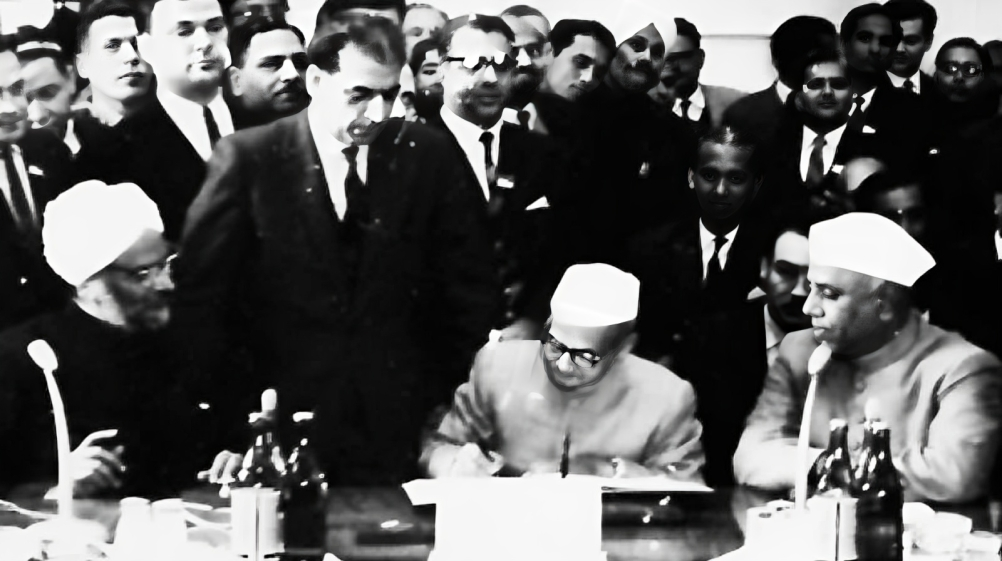
Why the Soviet Union Stepped In
During the Cold War, South Asia had become strategically important to both the Soviet Union and the United States. Moscow recognised that another war between India and Pakistan could destabilise the region and draw in major powers.
Rather than allowing tensions to simmer, Soviet Premier Alexei Kosygin invited the leaders of both countries to Tashkent. His objective was not to solve every political disagreement overnight, but to create enough common ground for diplomatic relations to resume.
Negotiations took place between 4 and 10 January 1966. Reports from participants suggest that discussions were often difficult, reflecting the deep mistrust that existed after the war. Even so, both delegations ultimately agreed that continued diplomacy was preferable to renewed fighting.
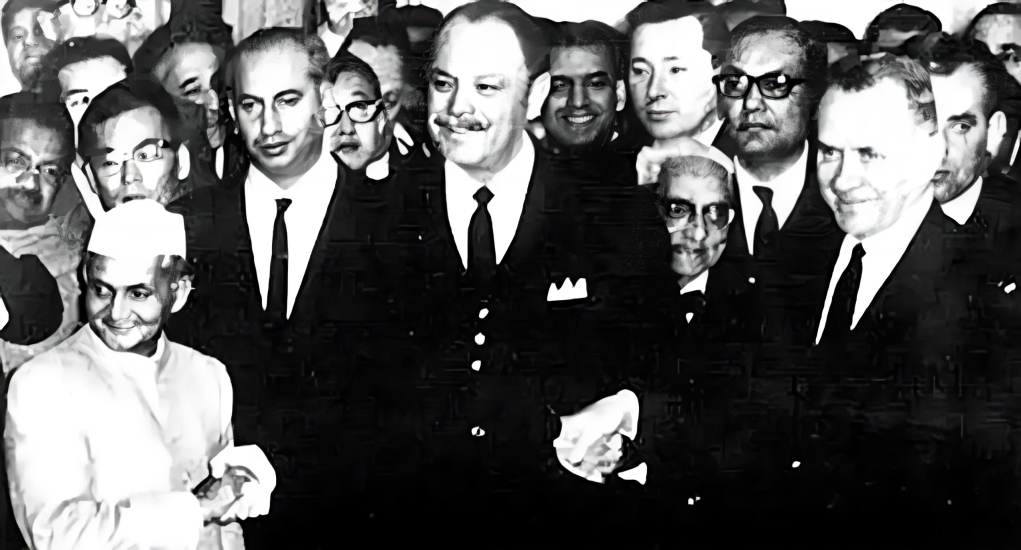
What Did the Tashkent Declaration Say?
Instead of attempting to settle every unresolved issue, the declaration focused on practical measures that could reduce immediate tensions and rebuild confidence.
Among its most important commitments were:
- the withdrawal of military forces to positions held before 5 August 1965;
- full observance of the United Nations-sponsored ceasefire;
- restoration of diplomatic relations between the two countries;
- respect for each other’s sovereignty, territorial integrity and internal affairs;
- settlement of future disputes through peaceful means rather than military action; and
- encouragement of economic, commercial and cultural exchanges.
The agreement also included arrangements for the return of prisoners of war and the restoration of normal communications wherever possible.
Taken together, these provisions were intended to restore stability rather than produce a comprehensive political settlement.
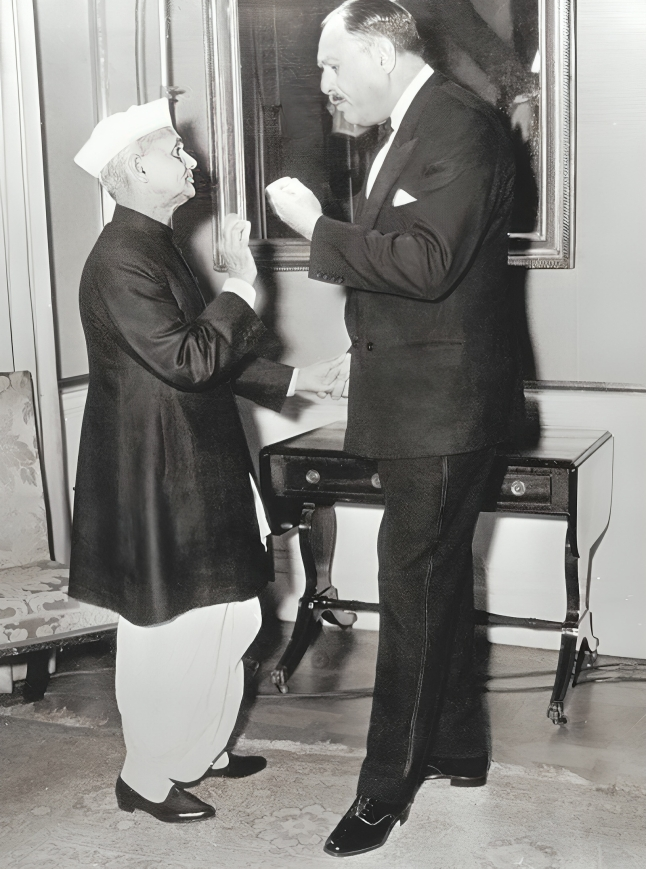
What the Declaration Did Not Resolve
One of the most common misunderstandings about the Tashkent Declaration is that it solved the Kashmir dispute. It did not.
Kashmir remained the central point of disagreement between India and Pakistan, and neither government altered its long-standing position during the negotiations. For that reason, the declaration is often viewed as a peace agreement rather than a peace settlement.
Its success lay in reducing immediate tensions and restoring diplomatic engagement—not in eliminating the underlying causes of conflict.
Lal Bahadur Shastri’s Final Hours
The declaration is remembered not only for what it achieved but also for the tragedy that followed.
Only a few hours after signing the agreement, Indian Prime Minister Lal Bahadur Shastri suffered a fatal heart attack in Tashkent during the early hours of 11 January 1966.
His sudden death stunned India. Having successfully led the country through the 1965 war and then negotiated peace, Shastri’s passing transformed the Tashkent Declaration into a moment of both diplomatic hope and national mourning.
Although official investigations concluded that he died of natural causes, questions surrounding the circumstances of his death have continued to attract public interest for decades. No conclusive evidence has emerged to overturn the official account.
Mixed Reactions in Both Countries
Like many diplomatic agreements, the Tashkent Declaration was interpreted differently on either side of the border.
Some Indian critics argued that military gains made during the war had not been translated into meaningful political concessions, particularly on Kashmir. Others, however, believed that avoiding another costly conflict was itself a significant achievement.
In Pakistan, reactions were equally divided. Supporters viewed the agreement as a necessary step toward restoring stability, while opponents felt it fell short of the country’s strategic expectations.
These contrasting opinions reflected the political realities of the time: what one group saw as compromise, another regarded as missed opportunity.
A Lasting Diplomatic Legacy
Measured purely by whether it resolved India-Pakistan disputes, the Tashkent Declaration may appear limited. Yet judging it solely on that basis overlooks its broader importance.
The agreement demonstrated that even after intense military confrontation, sustained dialogue remained possible. It reaffirmed the principle that diplomacy should remain the first avenue for resolving international disputes, however difficult those negotiations might be.
Its influence extended beyond 1966. Many of its core ideas—particularly the commitment to bilateral dialogue and peaceful dispute resolution—were later echoed in the Simla Agreement of 1972, signed after another major conflict between the two countries.
Why the Tashkent Declaration Still Matters
Today, the Tashkent Declaration occupies an important place in South Asian diplomatic history. It serves as a reminder that peace agreements are often imperfect. They rarely erase decades of political disagreement overnight. Instead, their value frequently lies in preventing further violence and creating opportunities for future dialogue.
For students of history, the declaration illustrates how diplomacy functions in practice—not as a dramatic solution to every problem, but as a gradual process of rebuilding communication, restoring trust and managing conflict.
More than fifty years after it was signed, the Tashkent Declaration remains an enduring example of post-war diplomacy. While it did not transform relations between India and Pakistan overnight, it showed that negotiation could continue even after one of the region’s most serious military confrontations. That lesson remains just as relevant today as it was in January 1966.
Tashkent Declaration
TASHKENT DECLARATION SIGNED BY PRIME MINISTER OF INDIA
AND PRESIDENT OF PAKISTAN
10 January, 1966
Tashkent
The Prime Minister of India and the President of Pakistan having met at Tashkent and having discussed the existing relations between India and Pakistan, hereby declare their firm resolve to restore normal and peaceful relations between their countries and to promote understanding and friendly relations between their peoples. They consider the attainment of these objectives of vital importance for the welfare of the 600 million people of India and Pakistan.
I
The Prime Minister of India and the President of Pakistan agree that both sides will exert all efforts to create good neighbourly relations between India and Pakistan in accordance with the United Nations Charter. They reaffirm their obligation under the Charter not to have recourse to force and to settle their disputes through peaceful means. They considered that the interests of peace in their region and particularly in the Indo-Pakistan Sub-Continent and, indeed, the interests of the peoples of India and Pakistan were not served by the continuance of tension between the two countries. It was against this background that Jammu and Kashmir was discussed, and each of the sides set forth its respective position.
II
The Prime Minister of India and the President of Pakistan have agreed that all armed personnel of the two countries shall be withdrawn not later than 25 February, 1966 to the positions they held prior to 5 August, 1965, and both sides shall observe the cease-fire terms on the cease-fire line.
III
The Prime Minister of India and the President of Pakistan have agreed that relations between India and Pakistan shall be based on the principle of non-interference in the internal affairs of each other.
IV
The Prime Minister of India and the President of Pakistan have agreed that both sides will discourage any propaganda directed against the other country, and will encourage propaganda which promotes the development of friendly relations between the two countries.
V
The Prime Minister of India and the President of Pakistan have agreed that the High Commissioner of India to Pakistan and the High Commissioner of Pakistan to India will return to their posts and that the normal functioning of diplomatic missions of both countries will be restored. Both Governments shall observe the Vienna Convention of 1961 on Diplomatic Intercourse.
VI
The Prime Minister of India and the President of Pakistan have agreed to consider measures towards the restoration of economic and trade relations, communications, as well as cultural exchanges between India and Pakistan, and to take measures to implement the existing agreements between India and Pakistan.
VII
The Prime Minister of India and the President of Pakistan have agreed that they give instructions to their respective authorities to carry out the repatriation of the prisoners of war.
VIII
The Prime Minister of India and the President of Pakistan have agreed that the sides will continue the discussion of questions relating to the problems of refugees and evictions/illegal immigrations. They also agreed that both sides will create conditions which will prevent the exodus of people. They further agreed to discuss the return of the property and assets taken over by either side in connection with the conflict.
IX
The Prime Minister of India and the President of Pakistan have agreed that the sides will continue meetings both at the highest and at other levels on matters of direct concern to both countries. Both sides have recognized the need to set up joint Indian-Pakistani bodies which will report to their Governments in order to decide what further steps should be taken.
The Prime Minister of India and the President of Pakistan record their feelings of deep appreciation and gratitude to the leaders of the Soviet Union, the Soviet Government and personally to the Chairman of the Council of Ministers of the U.S.S.R. for their constructive, friendly and noble part in bringing about the present meeting which has resulted in mutually satisfactory results. They also express to the Government and friendly people of Uzbekistan their sincere thankfulness for their overwhelming reception and generous hospitality.
They invite the Chairman of the Council of Ministers of the U.S.S.R. to witness this Declaration.
Sd /-
LAL BAHADUR
Prime Minister of India.
Tashkent, 10 January 1966.
Sd /-
M.A KHAN, F. M.
President of Pakistan.