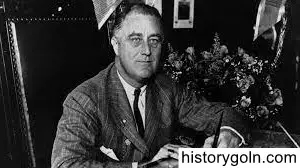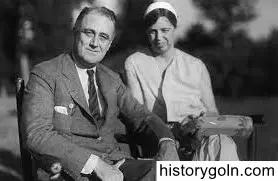

In the complex and often turbulent timeline of Pakistani politics, the era of General Muhammad Ayub Khan stands as a defining epoch. Ruling from 1958 to 1969, Ayub Khan was not merely Pakistan’s first military ruler; he was the architect of a vision that sought to transform a newly birthed, agrarian-heavy nation into a modern, industrializing state. His tenure is famously remembered as the “Decade of Development,” a label that encapsulates both his genuine achievements and the deep-seated political disillusionment that ultimately led to his downfall.
The Ascent: From Sandhurst to the Presidency
Born in 1907 in Rehana, Haripur (then in the North-West Frontier Province), Ayub Khan was a product of the British colonial military tradition. A graduate of the Royal Military College, Sandhurst, he proved himself during the Second World War. By 1951, he had become the first native Pakistani Commander-in-Chief of the Army.
The political volatility of the 1950s—characterized by frequent changes in government, constitutional deadlocks, and severe economic instability—created a vacuum of authority. On October 7, 1958, President Iskander Mirza declared martial law and appointed Ayub Khan as the Chief Martial Law Administrator. However, the power play was short-lived; just twenty days later, Ayub Khan ousted Mirza and assumed the presidency himself. For the first time, Pakistan’s fate was firmly in the hands of the military.
The Pillars of Ayub’s Reform
Ayub Khan viewed Pakistan through the lens of efficiency and modernization. His regime initiated several bold, albeit controversial, policy shifts:
1. The Basic Democracies System (1959):
Ayub was deeply skeptical of “Western-style” parliamentary democracy, which he blamed for the political chaos of the 1950s. He introduced “Basic Democracies,” a four-tier system starting from the Union Council level. It was an attempt to devolve power to the grassroots, yet critics argued it was merely a mechanism to create a loyal electoral college that would ensure his grip on power. In 1965, this system famously helped him defeat Fatima Jinnah, the sister of the nation’s founder, in a highly contested indirect election.
2. The Green Revolution:
During the mid-1960s, Pakistan witnessed a significant surge in agricultural production. Through the introduction of high-yielding wheat and rice varieties (the “Miracle Seeds”), improved irrigation networks, and the expansion of tractor use, Pakistan reached a level of near-self-sufficiency in food production. However, this progress often favored large landowners, further widening the economic gap in rural areas.
3. Economic and Industrial Modernization:
Ayub’s regime oversaw a period of remarkable GDP growth—averaging over 6% annually during the 1960s. He prioritized industrialization, facilitating the growth of large business houses (the famous “22 families”). Infrastructure projects like the Mangla Dam, the Tarbela Dam (initiated during his time), and the development of the Pakistan Steel Mills were designed to lay the foundation for a modern industrial state.
The Growing Shadow of Authoritarianism
While the economy flourished, the political atmosphere grew increasingly stifling. Ayub’s government enforced strict censorship through the Press and Publications Ordinance. Political parties were initially banned, and even when permitted later, the opposition was effectively marginalized. His regime relied heavily on the support of the bureaucracy and the military, creating a technocratic governance style that left no room for public dissent.
The Turning Point: 1965 and the Downward Spiral
The 1965 war with India was a watershed moment. While the government presented the war as a stalemate or a tactical success, the subsequent Tashkent Declaration, mediated by the Soviet Union, was perceived by many Pakistanis—particularly in Punjab—as a political capitulation.
This sparked public resentment. Furthermore, the rising economic disparity between West and East Pakistan (now Bangladesh) fueled intense anger. In East Pakistan, Sheikh Mujibur Rahman’s Six-Point movement gained massive momentum, highlighting the structural inequalities of the regime.
The End of an Era
By 1968, the “Decade of Development” had unraveled. Widespread protests broke out across both wings of the country. Students, laborers, and the political opposition rallied against the concentration of wealth and the lack of civil liberties. Ayub Khan, once the symbol of progress, was now viewed as the face of inequality and corruption.
Faced with mounting pressure and losing the support of the military—then led by General Yahya Khan—Ayub resigned on March 25, 1969. He handed power to Yahya Khan, who promptly declared a second martial law.
Legacy: A Double-Edged Sword
The legacy of Ayub Khan is still a subject of intense debate. Supporters point to the infrastructure, economic metrics, and the modernization of the education and legal systems as evidence of his vision. Opponents argue that his legacy is far more detrimental: he institutionalized the military’s intervention in politics, fostered regional and economic disparities that eventually led to the 1971 crisis, and silenced the democratic aspirations of the people.
Ultimately, Ayub Khan’s presidency set a precedent. He proved that a military ruler could govern through technocratic efficiency, but he also demonstrated the inherent fragility of a government built on the suppression of public will. The “Ayub Era” remains a cautionary tale of how economic success, if disconnected from political legitimacy, can eventually consume its own creator.
General Ayub Khan’s Gallery: